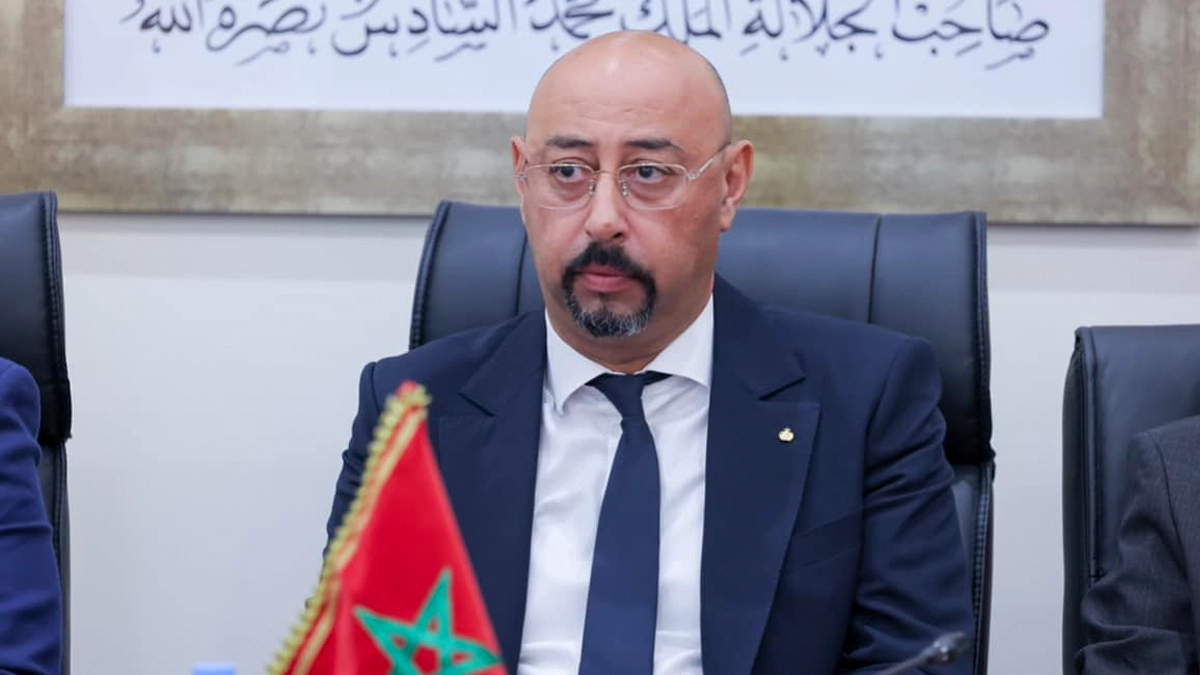


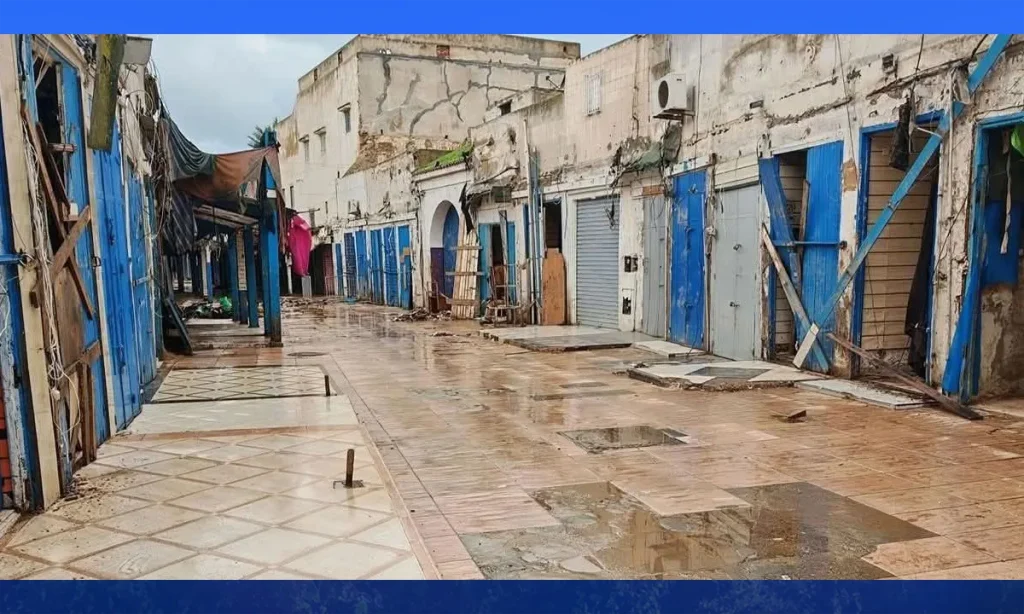

Today, Tuesday, at the headquarters of the Asfi provincial council, a meeting of the program steering committee was held, immediately following its central approval by various intervening partners, in order to rehabilitate the areas affected by the floods.
In addition, the steering committee was established as a comprehensive institutional and legal framework that is responsible for the direct oversight of the implementation of the agreed-upon measures, ensuring coordination among the various actors, alongside supporting the execution, monitoring the stages of achievement, and evaluating the field impact of the different interventions.
The technical work carried out by the specialized committees enabled the completion of an accurate census of the damaged houses and commercial establishments, as well as a comprehensive diagnosis of the condition of the roads, networks, and public facilities, which provided a basic database relied upon by the local system in shaping the components of this program and determining its priority areas and implementation mechanisms.
In this context, the meeting reviewed the contracting parties, clarifying the commitments of each side, in addition to presenting a detailed overview of the main aspects of the program, which include supporting the repair of damaged houses, accompanying the repair of damaged commercial establishments, and contributing to the resumption of their economic activities, as well as supporting affected street vendors by establishing a project to stabilize them near “Bab al-Shabba.”
The program also includes a component for rehabilitating, strengthening, and upgrading the roads and affected areas in the city, as well as undertaking clearing, restoration, and reinforcement works for the “sha’ab,” along with enhancing social centers and supporting local activities in the old city, in addition to humanitarian initiatives and parallel forms of support for the affected groups.
In this context, and in adherence to the high directives of King Mohammed VI, the importance of comprehensive mobilization was emphasized, along with enhancing coordination mechanisms among all interveners, ensuring the effective implementation of the programmed measures and securing a coherent and integrated execution of the various dimensions of the program.
On this occasion, the attendees renewed their confirmation of the value of the royal initiative that embodies the continuous care the king gives to citizens, reflecting a spirit of commitment and responsibility in addressing the impacts of natural disasters, through adopting a comprehensive solidarity approach based on proximity and listening to the concerns of the population, and responding to their basic needs.
In this regard, all participants emphasized that this project represents a model for a consistent approach in managing the impacts of natural disasters, based on effective field action and unifying efforts, contributing to restoring social and economic balance in the affected areas and enhancing the territorial capacity for recovery and strengthening its immunity against future risks.