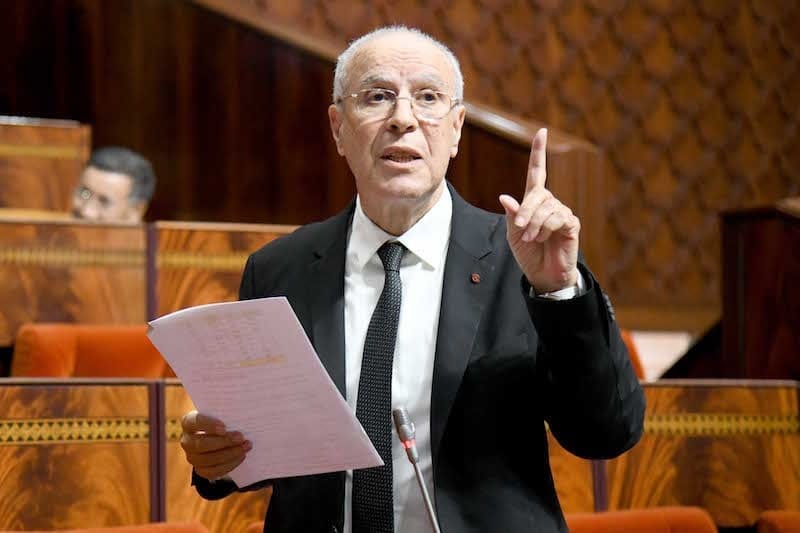


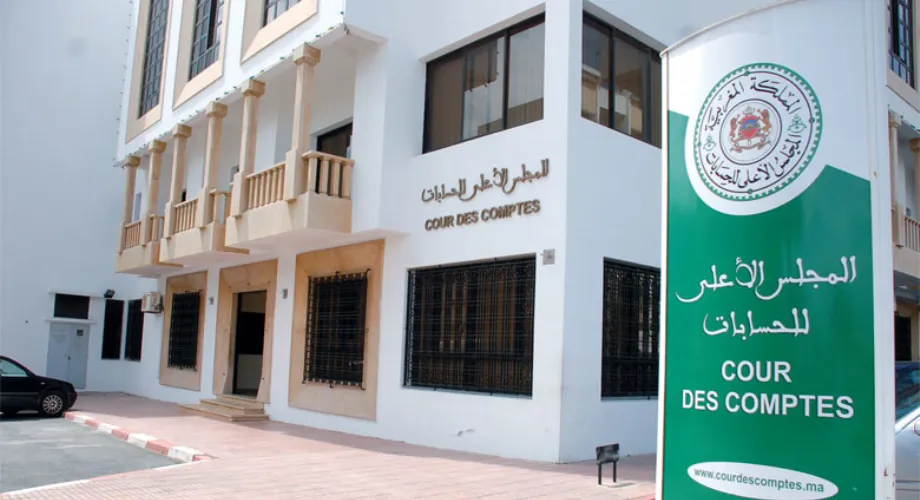

The Higher Court of Accounts has published its report containing a statement on its activities and the activities of the regional courts of accounts for the period 2024-2025, where this report was issued in the official gazette number 7476 repeated dated 3 Sha’ban 1447, corresponding to January 23, 2026.
The council mentioned, in a statement today, Wednesday, that the issuance of this report comes “in implementation of the high directives of His Majesty King Mohammed VI, may God support him, aimed at ensuring that the Higher Court of Accounts carries out its constitutional duties, particularly in exercising supreme oversight over public finances, in the area of supporting and protecting the principles and values of good governance, transparency, and accountability, and in application of the provisions of Article 148 of the Constitution of the Kingdom.”
The same source added that, in order for the council to continuously improve the content of its annual report and to enhance its readability, given its immense importance in facilitating its use by public affairs managers and related parties and enriching public discussion about public affairs management, as well as promoting a culture of good management and accountability, the report for 2024-2025 has been structured into three sections, taking into account the roles and responsibilities assigned to the financial courts.
The first section (related to the competence of enshrining the principle of linking accountability with responsibility) presents a statement on the work of these courts concerning the competences related to establishing the principle of linking accountability with responsibility, while the second section addresses the activities related to improving public management, whereas the third and final section is dedicated to support and international cooperation activities.
In the field of ruling on the accounts presented by public accountants, the financial courts issued for the period 2024-2025 a total of 4,452 final decisions and rulings, of which 4,235 decisions and rulings involved acquittal (95%) and 217 decisions and rulings (5%) were issued declaring a total deficit amounting to 57,882,097.54 dirhams. These courts also recorded the recovery of the concerned entities for a total amount of 16,433,633.29 dirhams before issuing final decisions or rulings concerning the relevant accounts.
In the area of disciplinary actions related to the budget and financial affairs, the council and the regional courts of accounts issued during the same period a total of 99 decisions and rulings, of which 72 involved fines amounting to a total of 4,139,000.00 dirhams, in addition to ruling on the return of a total amount of 1,151,676.40 dirhams.
According to the statement, the financial courts recorded that a number of public entities, upon receiving the preliminary observations and before exhausting the relevant procedures, took corrective actions that had a positive financial impact estimated at approximately 629.2 million dirhams, in addition to other effects of a managerial, social, or environmental nature.
In this regard, during the year 2024 and until September 30, 2025, the Attorney General at the Higher Court of Accounts referred to the Attorney General at the Court of Cassation – President of the Public Prosecution – twenty files concerning actions that may warrant criminal penalties. These files involved 20 entities, including six public state agencies and 13 local communities (out of 1,590 at a rate of 0.8%) and one association.
The second chapter of the first section presents an outcome of the activities of receiving, following up, and monitoring the mandatory declaration of assets. In this regard, the statement mentioned that the council was able, thanks to a set of measures it took, to manage the processes of receiving and monitoring compliance with the obligation to submit asset declarations more efficiently, as it identified the number of obligated individuals failing to submit beginning and end declarations for the category of civil servants and public officials at a total of 8,116 individuals, of whom 39% complied following notifications from the relevant government authorities, while 61% had not yet complied with the obligation to submit the declaration. In this context, the financial courts are undertaking warning procedures for the obligated individuals who fail either to submit the initial declaration or to renew it or to submit the final declaration.
The second chapter also presents a summary of the council’s report concerning the auditing of the annual accounts of political parties and examining the validity of their expenditures concerning the public support granted to them for the 2023 financial year to cover their management expenses and organize their regular national conferences, which was previously published in May 2025 and communicated about.
The council recorded the continuation of processes to return unutilized or unjustified support amounts to the treasury by 24 parties, where, as of November 15, 2025, a total of 36.03 million dirhams had been recovered, while the amounts that have not yet been returned by 14 parties were limited to a total value of 21.85 million dirhams.
Regarding the third chapter of the first section, it addresses the most important findings resulting from the work of the Higher Court of Accounts and the regional courts of accounts in the field of following up on the implementation of their issued recommendations, aiming to ensure a sustainable impact of the supervisory activities of the financial courts.
In this regard, for the recommendations scheduled for implementation before the end of the year 2025, the percentage of fully implemented recommendations reached 40 percent, while 44 percent are in the process of being completed, and 16 percent have not been initiated due to reasons related to the fact that some of the issued recommendations require broader engagement from the various parties involved in implementing them and enhancing coordination among them, to ensure achieving the desired impact, particularly on the social and economic levels.
The second chapter of the council’s annual report included the most important results of the financial courts’ activities related to the evaluation and monitoring functions of projects and programs, which aim through their recommendations to improve the management of public affairs, in integration with the activities related to the punitive function of the financial courts.
The first chapter of this section presents the most important results of following up on five workshops related to major reforms that the Kingdom has engaged in, concerning social protection, investment, renewable energies, public institutions and enterprises, and taxation.
The statement indicated that this follow-up consolidates the approach that the council has initiated over the past three years, which has had a tangible effect on accelerating the pace of implementing the monitored workshops, and has also served as a source of alert to a number of risks that may limit achieving the targeted goals, particularly those associated with governance and financing.
The second chapter presents the results of five missions related to evaluating public programs and projects, in the areas of reducing regional and social disparities, road safety, developing basic vocational training, mobilizing unusual water resources, and performance efficiency. This chapter began with noteworthy points arising from what the council has accumulated from missions related to monitoring integrated development programs, where the council emphasized the necessity of precise control of issues and needs of each territorial region and its natural and socio-cultural specificities, as well as establishing collective work among the various institutional actors and the optimal use of available local expertise and competencies, with the establishment of a rigorous system for leadership, follow-up, and evaluation to create the actual impact of these programs.
The third chapter addresses management oversight, containing seventeen conclusions, prepared based on the results of 176 oversight missions, including 159 missions carried out by the regional courts of accounts. These conclusions have been categorized in the annual report according to a sectoral/topic-based approach, encompassing financial sectors, social and cultural sectors, productive sectors, as well as topics related to regional development and the management of local public facilities.
This chapter also includes a set of noteworthy points regarding public finances, where the council indicated that social challenges and climatic conditions, as well as the funding needs of ongoing and programmed projects and major reforms, could further increase pressures on budget burdens, necessitating innovative frameworks for mobilizing financing and developing effective partnerships between the public and private sectors.
The council reiterated the urgent need to accelerate the pace of pension system reform to avoid any negative repercussions on the sustainability of this system, and the risks it poses to public finances in the medium and long term in relation to the situation of the civil pension system, which recorded a technical deficit of 7.2 billion dirhams at the end of 2024, with risks of depleting its reserve by 2030.
The fourth chapter of the second section presents two summary conclusions of the remaining works of the five sectoral chambers of the council (10 missions) and the twelve regional courts of accounts (156 missions), in the area of management oversight, including works performed according to the integrated oversight methodology.
These summaries especially review the entities that were monitored during the 2024-2025 period, as well as the most important observations and recommendations that resulted from these works, in addition to the most prominent manifestations of the impact of some of them in their financial, managerial, social, and environmental dimensions.
The third part of the annual report consists of two chapters; the first of which pertains to the support activities within the financial courts in aspects related to financial and human resources, capacity building, digital transformation, and record management, while the second chapter presents the council’s activities in the framework of international cooperation, both multilateral and bilateral.
The statement indicated that the annual report of the Higher Court of Accounts for the period 2024-2025 can be downloaded from the official website of the General Secretariat of the Government: www.sgg.gov.ma as well as the official website of the Higher Court of Accounts: www.courdescomptes.ma. The main themes of this report can also be downloaded in both Arabic and French from the official website of the Higher Court of Accounts: www.courdescomptes.ma