

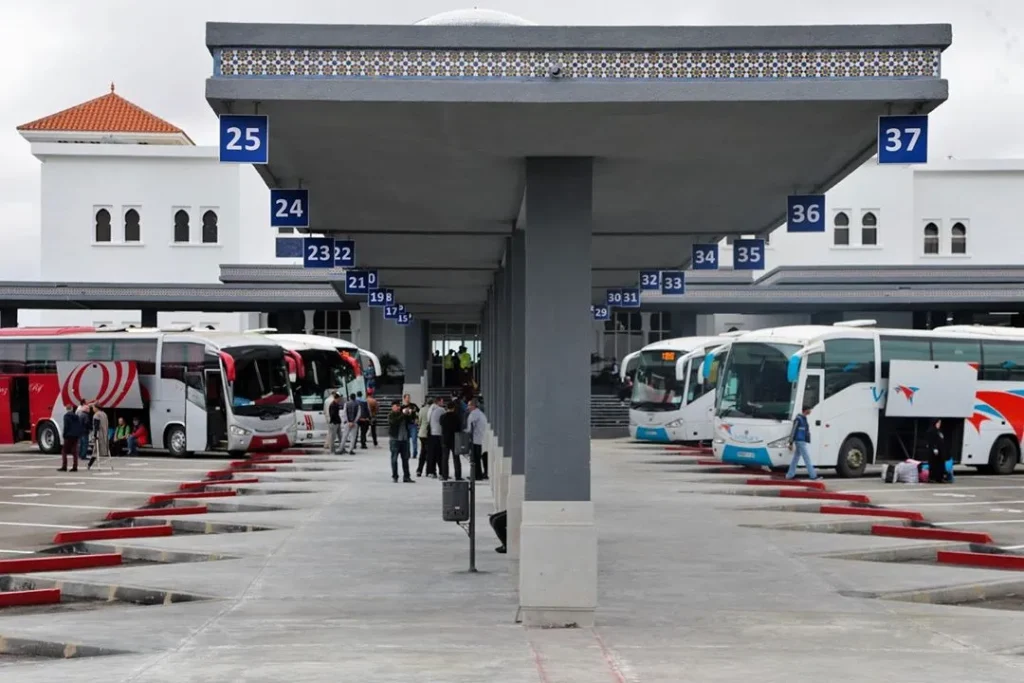

A report issued by the Court of Auditors on Wednesday, January 28, revealed irregularities in the procedures for granting exceptional licenses for transporting passengers outside the authorized times. It indicated that this issue includes the bus station in Tangier and ten other Moroccan stations.
The council called for improved governance and transparency in this process to ensure the quality and safety of transportation services.
According to the data revealed by the council, transport inspectors issued a total of approximately 52,600 exceptional licenses in 2023, with 98% of these concentrated in 11 major bus stations, namely: Fes, Inzegan, Ksar al-Kabir, Dakhla, Tetouan, Casablanca, Rabat, Tangier, Marrakech, Asilah, and Meknes.
This high concentration reflects a significant geographical imbalance in the distribution of these licenses, raising questions about fairness and balanced opportunity distribution among carriers. The report recorded several fundamental shortcomings in the current system for granting these licenses, most notably:
- The lack of a clear terms of reference and an organized competitive process, which prevents the application of objective technical and economic priorities when evaluating the bids submitted by carriers, based on predefined indicators and criteria.
- The absence of an integrated and unified processing of the bids from different bus stations, which hinders the guarantee of principles of transparency, equality in dealing with applicants, and mutual oversight and tracking of operations.
- The failure to adhere to merit-based criteria primarily focused on the quality of services provided, such as safety levels, fleet condition, and operational efficiency.
- The inadequacy in publishing the data on the granting of licenses by all available means, especially through the announcement boards at the bus stations themselves, thus violating the provisions of Law No. 54.19 concerning the charter of public facilities, which mandates transparency and wide dissemination of information.
The report considered that these exceptional measures represent a crucial mechanism to meet the increasing demand for transportation, especially during peak periods or special occasions. However, the lack of good governance may expose the safety of passengers to risks and open the door to improper practices or discrimination among carriers.
This report comes in the context of the efforts of Moroccan financial courts to enhance oversight of public management and aligns with the strategic directions of the Court of Auditors in promoting transparency and accountability in sectors with a public service character, such as road transport that affects the daily lives of citizens.