

Nouveau Motorz CEO Faces Controversy Over Electric Car Claims
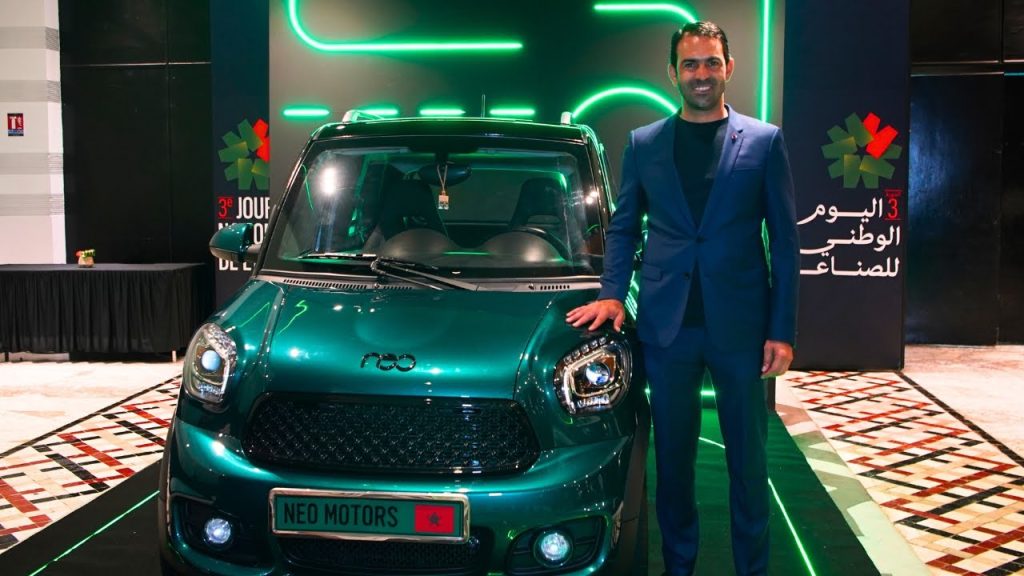
The CEO of Nouveau Motorz, Nassim Belkhayat, has sparked significant debate following a recent media appearance on Medi1 TV, where he responded to allegations of copying a Chinese car and presenting it as Morocco’s first fully electric vehicle.
During the interview, Belkhayat made various statements, suggesting they could have offered a Moroccan design with a technology they were unfamiliar with, which might have garnered praise. Instead, they opted to adapt a “proven Asian platform” simply.
Belkhayat described their approach as “unique,” emphasizing their strategy of re-manufacturing. He pointed out that while this method exists in the mobile phone industry, it is not common in vehicle manufacturing. He claimed they are not only “adapting the car” but also making substantial modifications to meet Moroccan and European standards, which he believes will allow them to advance, expand, and create jobs.
He noted that this approach makes their strategy “sovereign” because production occurs in Morocco, and value creation remains local, urging other entrepreneurs to adopt a similar approach.
During the discussion, Belkhayat acknowledged a communication issue that led to confusion regarding their new vehicle, clarifying that they intended to convey it as “a 100% electric car made by a Moroccan company,” rather than a “Moroccan electric car.”
Major Controversy
Belkhayat’s remarks are likely to ignite further controversy, especially after the launch celebration of the “DIAL-E” vehicle transitioned from a national achievement to a credibility scandal for Morocco.
What was announced during the National Industry Day in November 2025 as “the first 100% Moroccan electric car” quickly revealed itself as a copy of inexpensive Chinese models, such as the “Wuling Mini EV,” “Today Sunshine M1,” and “Goxy.”
This is not merely “inspiration,” as the CEO claims, but a blatant intellectual theft that undermines trust in the emerging local industry and exploits governmental support to market imported products disguised as “Moroccan.”
Clear Copying
Since the official announcement, social media has been filled with comparative images showing that the “DIAL-E” is merely a slightly modified version of small Chinese electric vehicles available for less than $5,000. The dimensions, chassis, and external design—down to the arrangement of the lights—match by up to 90% with models like the “Wuling Mini EV,” which revolutionized the market in China due to its simplicity and low cost.
However, while these original Chinese models are sold at low prices, Nouveau Motorz is pricing its claimed “Moroccan” product at 100,000 Dirhams (over $10,000), raising questions about genuine profitability and added value.
The debate extends beyond design; the vehicle fails to meet the “Made in Morocco” classification, which necessitates at least 40% local components. Most key parts, such as the chassis and electronics, are imported from China and merely reassembled at the Nouveau Motorz facility, resembling “final assembly” more than true production.
This approach is not innovation but a circumvention of investment in research and development, leveraging media promotion to present it as a “qualitative leap” for the Moroccan economy. While Morocco produces over 700,000 vehicles annually through global companies like Renault and Stellantis, Nouveau Motorz casts doubt on local capacities with a product akin to a “knockoff” found in Asian markets.
Belkhayat’s Justifications: Re-manufacturing or Media Fad?
To defend the project, Nassim Belkhayat made remarks that incited both ridicule and outrage. He explicitly admitted to the “initial inspiration from China,” but rejected the notion of intellectual theft, favoring terms like “smart re-manufacturing” and “reverse engineering” as justification. He stated that the company “studied several existing chassis for reproduction and adaptation, especially updating certain parts to meet European licensing requirements,” adding that this is “not imitation, but rather an industrial and technological upgrade.”
Such justifications appear to be a desperate attempt to transform failure into a “successful Asian strategy,” drawing inspiration from companies like Xiaomi in the mobile sector. However, in the automotive world, where intellectual property is protected by strict international laws, this is clear copying that could expose Nouveau Motorz to lawsuits from Chinese companies or erode their credibility in the European markets they aim to export to.