

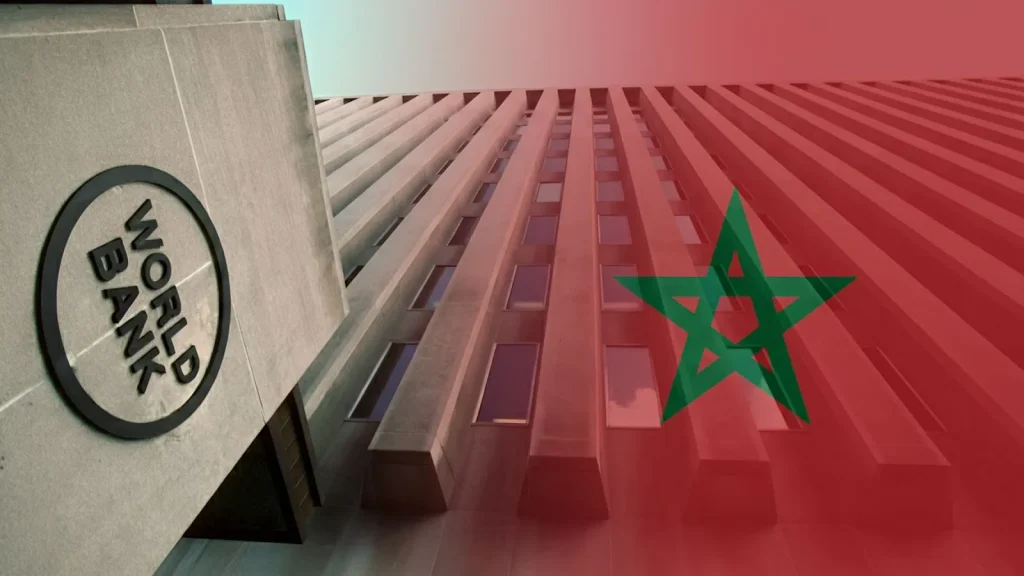
The World Bank group highlighted, in an update to its report “Global Economic Prospects,” issued in Washington, that Morocco is implementing deep regulatory reforms that it described as “unexpected.”
According to the bank, these reforms, which aim to boost private sector activity, could contribute to stimulating growth, reducing the informal economy, and creating jobs.
The international financial institution also emphasized that favorable climatic conditions contributed to the recovery of agricultural production in the kingdom.
According to the report, current account balances also improved, partly due to an increase in remittances and tourism revenues.
The World Bank addressed the budget deficit in oil-importing countries, including Morocco, predicting a decline in this deficit during the period 2026-2027. This is attributed in part to the “contractionary policies” implemented, particularly in the kingdom.
Regarding the growth rate in Morocco, the report predicts that its average will reach 4.4 percent in 2026, with slower expansion in the agriculture and industry sectors, alongside more moderated employment growth.
At the global level, the World Bank’s estimates indicate that growth is expected to slow slightly to 2.6 percent in 2026, before rising to 2.7 percent in 2027, signaling stability over the next two years.
These economic forecasts represent an upward revision compared to the previous estimates issued by the World Bank last June.