


On New Year’s Eve 2026, the world celebrates in various ways that range from traditional to sometimes strange, where each custom carries a special symbolism for welcoming the new year with joy, luck, and prosperity.
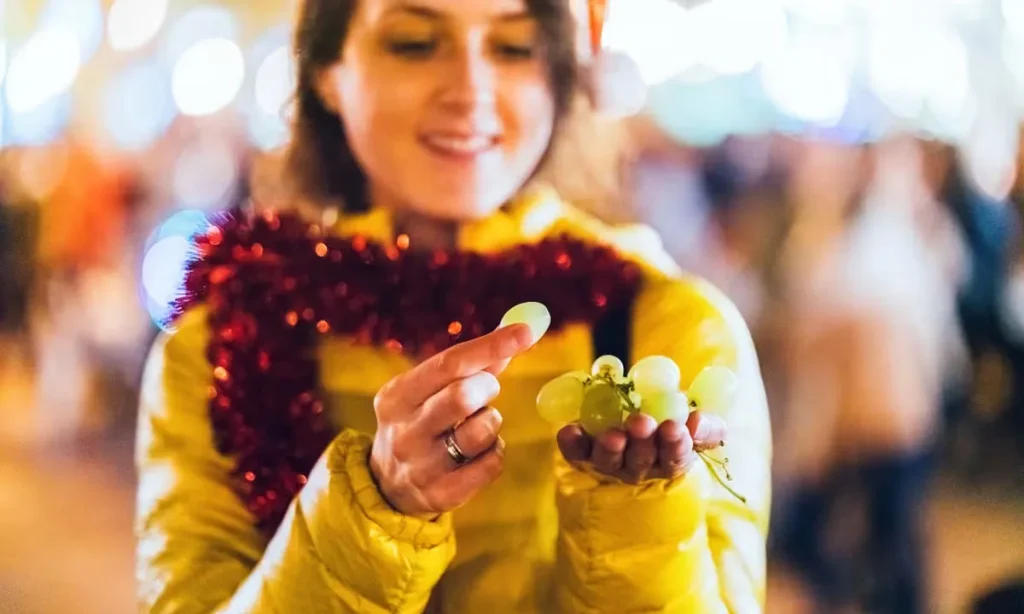
In Spain, the famous tradition of eating 12 grapes at the stroke of midnight is well-known, with each grape representing a month of the new year. It is believed that completing this ritual brings luck and prosperity. This tradition has spread to Latin American countries and the Philippines, where revelers maintain the same rituals.
In Turkey, sprinkling salt at the doorstep at midnight is considered a symbol of good luck. Meanwhile, in Italy, celebrants throw old pots, pans, and furniture out of their windows to get rid of negative energy and welcome in the new.
In Romania, some wear bear costumes and roam from house to house to ward off evil spirits. In Denmark, old dishes are thrown at friends’ doors to bring good luck and improve relationships. In Greece, families hang a bulb on their doors as a symbol of renewal and growth.
Some countries feature more exciting rituals, such as Ecuador, where effigies representing the past year are burned. In the Philippines, families display 12 round fruits symbolizing wealth. Japan sees Buddhist temples ringing bells 108 times to dispel negativity. In Scotland, residents light fireballs and walk through the streets during the “Hogmanay” celebrations.
These diverse traditions reflect the variety of global cultures and their unique ways of welcoming the new year, showcasing how celebration can blend entertainment and symbolism.
Follow Tangier7 on GOOGLE NEWS and Facebook. Also on the Instagram platform. In addition to X and Nabd app.