


The Government of Catalonia announced on Tuesday a veterinary emergency throughout the region, which is the highest level of animal health alert in the Catalan legal system, for the first time since the establishment of modern Generalitat in 1980.
The announcement came just hours after confirming 13 positive cases of African swine fever in dead wild boars in the Collserola mountain range (Greater Barcelona).
Why was the emergency declared now?
The spokesperson for the Catalan government and regional minister, Sílvia Paneblanques, clarified in an emergency press conference: “We declare the emergency to give ourselves the ability to act as quickly as possible legally and logistically if the outbreak expands, even by one centimeter. The only goal is to keep the epidemic contained within the circle with a radius of 20 kilometers that has already been cordoned off, and to never let it out.”
Areas and main measures of the emergency
- Infection and prohibition area (91 municipalities)
It includes almost the entire urban area of Barcelona and its surroundings:- Barcelona, L’Hospitalet de Llobregat, Badalona, Santa Coloma de Gramenet, Terrassa, Sabadell, Mataró, Granollers, Sant Cugat del Vallès, Rubí, Vilanova i la Geltrú, Castelldefels, Gavà, El Prat, Cornellà, Sant Boi de Llobregat… and others.
- Complete closure of nature
- Access to forests, mountains, trails, rivers, and natural areas within the 91 municipalities is absolutely prohibited.
- The ban includes: hiking, mountain running, mountain biking, climbing, collecting mushrooms or chestnuts, nature photography, and even dog walking without a muzzle and leash.
- The only exception: individuals officially authorized by the Department of Agriculture or security forces.
- Ban on hunting throughout Catalonia
- All forms of hunting (including wild boar hunting) are canceled in the entire region until further notice.
- All permits, competitions, and tournaments are canceled.
- Freezing movement of pigs and their products
- Movement of live pigs within Catalonia or out of it is prohibited unless with special permission.
- Export of fresh meat and processed products from the infected area is frozen.
- Military intervention
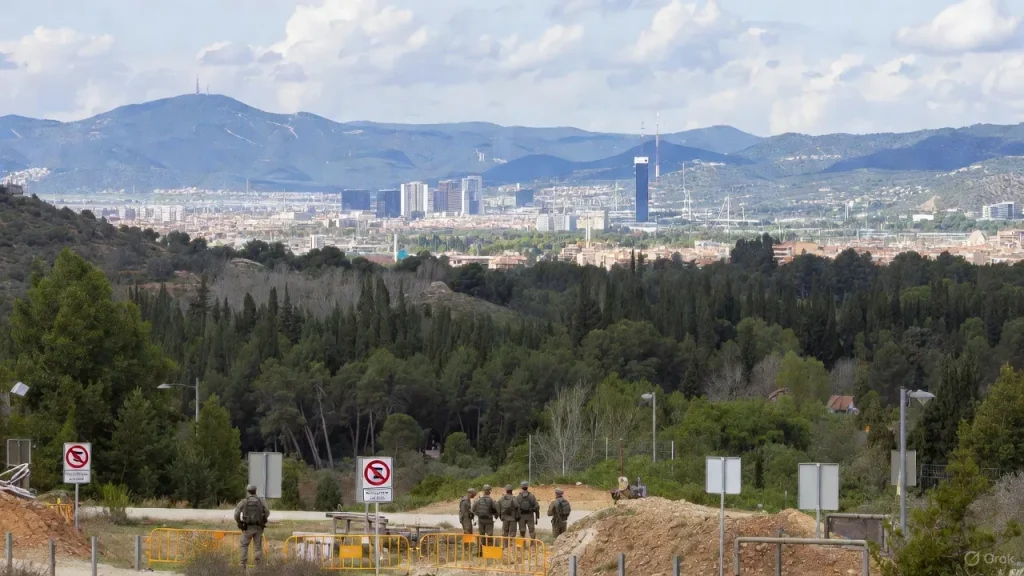
- The Spanish Military Emergency Unit (UME) joined with drones, trained dogs, and ground teams to search for dead boars and cull live herds in high-risk areas.
- Severe penalties
- Violating the ban is considered a “very serious administrative offense.”
- Fines can reach up to €600,000 for individuals and several million for companies or associations.
Health situation up to this moment
- 13 confirmed positive cases in dead wild boars, all within a 10 km radius around Cerdanyola del Vallès.
- No infections have been reported in commercial farms so far.
- More than 100 wild boar carcasses have been found, most of which died from other causes.
The mystery of the origin remains
The discovered genetic strain (group 29) is the same strain that was used in research at the IRTA-CReSA center, located less than 5 kilometers from the outbreak. The Spanish government and the European Union announced the opening of an official investigation into the possibility of a “laboratory leak.”
The immediate economic impact
- China, Japan, the Philippines, and several Asian countries have temporarily suspended imports of Spanish pork.
- Estimated losses: over €10 million daily for the sector.