

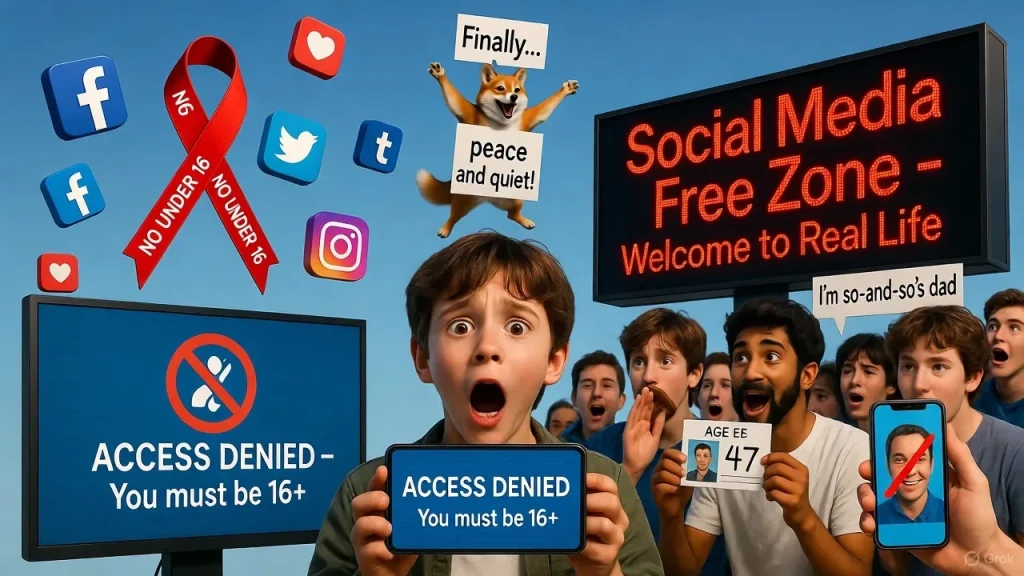

Australia officially implemented a ban today, Wednesday, on the use of social media by teenagers under 16 years of age, in a globally pioneering step aimed at protecting them from addiction to platforms like Instagram, TikTok, and Snapchat.
This decision affects hundreds of thousands of teenagers who previously spent long hours daily on these platforms, making Australia one of the first countries to impose some of the strictest limitations against major tech companies like American firms Meta and Google.
The decision prohibits platforms such as Facebook, Instagram, YouTube, TikTok, Snapchat, Reddit, and X from opening accounts for users under sixteen and requires them to close currently open accounts. It also includes streaming platforms like Kik and Twitch.
Platforms affected by the decision may face fines of up to 28 million euros if they do not take “reasonable” measures to ensure its implementation.
The decision took effect today, Wednesday, at midnight Canberra-Sydney time (13:00 GMT Tuesday).
The Australian measure currently exempts the applications WhatsApp, Pinterest, and the video game site Roblox. However, the Australian government clarified that the list of affected applications could evolve.
What technology is used?
Social media platforms will be required to adopt Age Assurance Technologies, alongside a mixture of other techniques to verify age and prevent account creation or retention for users under 16.
The goal is to take “reasonable steps” to uncover these users, focusing on privacy and avoiding reliance solely on identity documents. Here are the main methods used:
| Technology | Description | Advantages and Challenges |
|---|---|---|
| Age Inference | Estimating age based on user behavior, such as browsing patterns, interactions, or previous data. | May be less accurate and reliant on platform data. |
| Age Estimation via Selfie | Analyzing a selfie or short video using AI to estimate age. | Relatively accurate and easy to use, but raises privacy concerns. |
| ID Checks | Uploading an ID card or driving license, or linking the account to a bank account. | Reliable, but optional and not mandatory to avoid discrimination. |
| Alternative Methods | Other options like email verification or linking accounts, providing alternatives that do not rely on documents. | Flexible, but may be less effective against circumvention. |
How to Implement
- Removing existing accounts: Platforms will identify and disable existing accounts for users under 16, hiding previous content. For example, Meta (Facebook and Instagram) announced that its technology will identify users regardless of the email used.
- Preventing new accounts: Upon registration, age verification will be required, and failure will block access.
- Testing and consultations: The Australian eSafety Commissioner has been testing these technologies since August 2025 and confirmed their feasibility with coordination among platforms.
- Exceptions: Applications like YouTube Kids, WhatsApp, or Messenger Kids are exempt, as they focus on education or safe communication.
Challenges and Criticisms
Despite broad support (about 66% of Australians), experts criticize the effectiveness of the technologies, as it may drive children to unregulated platforms or cause them to use others’ accounts. There are also concerns about privacy and freedom. However, parents and child rights advocates have praised the law as a step toward protecting mental health. This ban is considered a global model and may inspire other countries like the UK and the US.
Follow Tanja7 on GOOGLE NEWS and Facebook. Also on Instagram, in addition to X and Nabd app.