


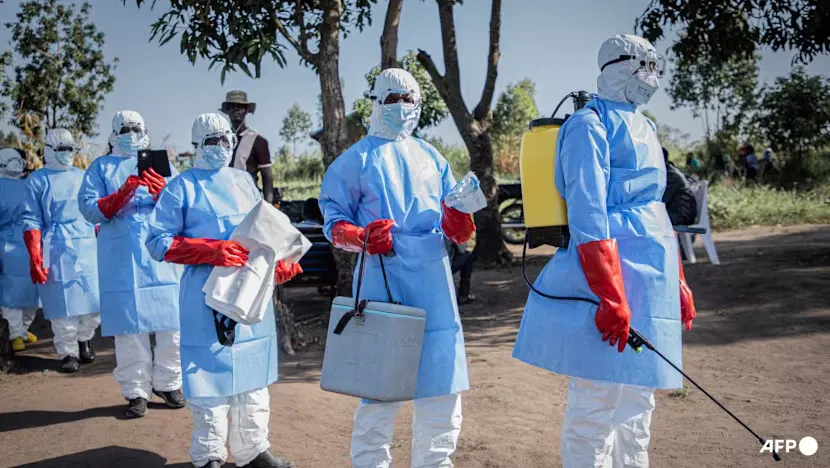

The World Health Organization and the United Nations Children’s Fund (UNICEF) warned today, Friday, that the Ebola epidemic in the Democratic Republic of the Congo continues to spread, and that its true scale is likely still less than actual estimates.
As of June 10, 676 confirmed cases and 136 deaths have been counted. Olivier Le Polain, head of the epidemiology and response analysis unit at WHO, stated in a press release in Geneva that the epidemic now affects 34 health areas in Ituri, North Kivu, and South Kivu provinces, extending over a geographical area of about 1,000 kilometers.
According to the WHO official, who spoke via video link from the city of Beni in North Kivu, the outbreak is fueled by the dense movement of the population, the ongoing absence of security, and a weak health system. Seventeen health areas have been identified as priority hotspots that require enhanced surveillance, contact tracing, testing, and patient care.
For his part, Douglas Noble, the Ebola emergency official at UNICEF, who has just returned from Bunia in Ituri province, emphasized the particular vulnerability faced by children in an area marked by conflict, population displacement, and chronic malnutrition. More than half of children under five there suffer from malnutrition, while fewer than one in five have ever received basic vaccinations.
Children currently represent between 14 and 17 percent of registered cases, but this percentage is expected to rise as the transmission of the infection evolves within families. Since the initial symptoms of the disease in children resemble those of malaria, early diagnosis remains a significant challenge.
UNICEF also expressed concern over the lack of information within local communities, as a recent survey showed that nearly two-thirds of youth do not know how the Ebola virus is transmitted, and about half of them reject the return of a person recovered from the disease to their community.
Moreover, the epidemic has crossed borders into Uganda, where 19 cases and two deaths have already been reported. UNICEF is supporting preventive efforts in 37 high-risk Ugandan districts.
The two UN agencies called for a rapid enhancement of the international response, as UNICEF continues to seek $17.4 million of the $70.7 million needed to fund its operations over the next six months. They also emphasized the necessity of ensuring safe and unhindered humanitarian access to contain the spread of the virus.