


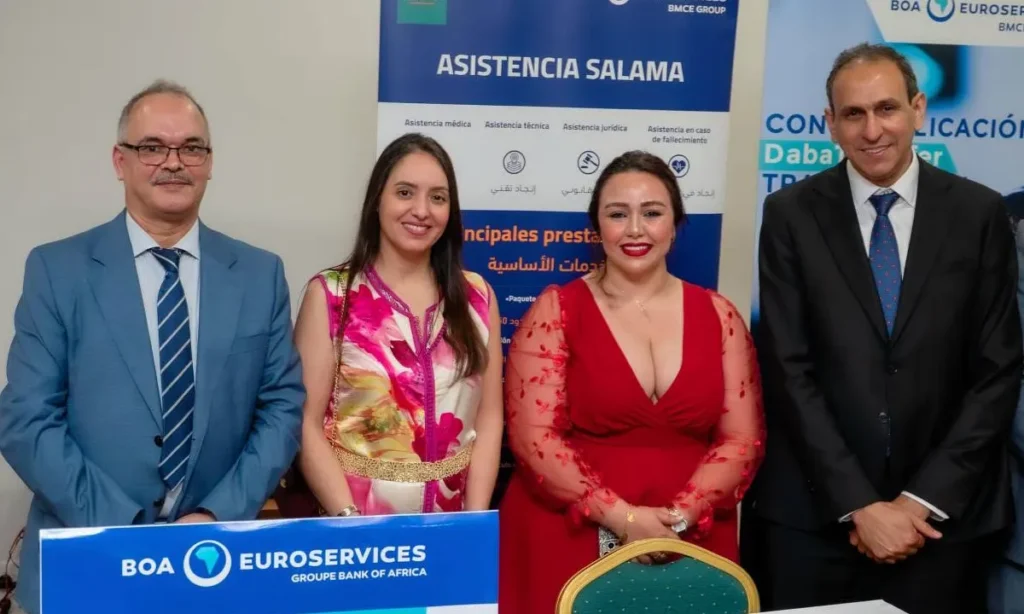

In a move that sparked a lot of comments and mockery on social media, the popular singer Cheikha Tarax (Fatima Zahra Tarax) participated in the inauguration of the new BOA Euroservices office (BMCE Group) in Tarragona, Spain.
The ceremony coincided with the honoring of the Consul General of the Kingdom of Morocco in Tarragona, Lleida, and Aragon, Ikram Shaheen, in appreciation of her cooperation with the institution over the past years, on the occasion of the conclusion of her consular duties.
The Consulate General of Morocco in Tarragona published an official statement on its Facebook page describing the ceremony as “a special evening, full of surprises and renewed meetings and valuable human moments.” It thanked BOA Euroservices for “this kind gesture,” wishing the consul success in her new phase of serving the Moroccan community and expressing appreciation for those present.
However, the official statement did not explicitly mention Cheikha Tarax, and the photos published by the consulate excluded any clear reference to her or her artistic participation, opening the door to questions about the nature of her role in the official event.
The singer’s photos tell another story
In contrast, Cheikha Tarax posted photos and videos from the event on her personal accounts, showing herself at the peak of happiness and elegance, wearing attractive and relatively provocative looks, amid warm interactions with the attendees. She described the experience as “went beautifully,” expressing her gratitude for the warm welcome and appreciation.
These photos quickly spread and sparked a wave of contradictory comments.
Reactions: Between Soft Diplomacy and Mockery
Some followers viewed Tarax’s participation—known for her popular songs and lively performances at weddings and parties—as a form of “popular diplomacy” or “soft diplomacy” that brings people closer and breaks official rigidity. Some comments lightly mocked her as the “roaming ambassador” who can accomplish what traditional protocols cannot.
On the other hand, some criticized the use of a popular artist in a formal consular context, considering it inappropriate or inconsistent with the image of Moroccan diplomatic representation abroad.
Mocking comments spread, circulating “the diplomacy of the Cheikhat” versus “traditional diplomacy,” with indications that popular art might reach people’s hearts faster than official statements.