

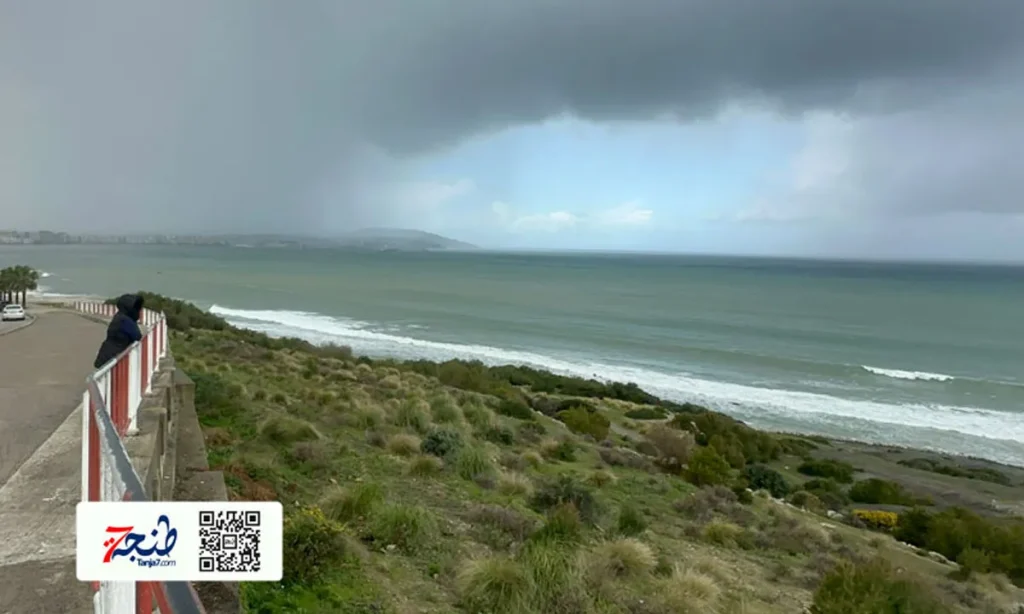

The waters of the Mediterranean Sea have experienced an unprecedented rise in surface temperatures in recent years. This development may have direct implications for weather in Morocco and North African countries, according to the Arab Center for Climate.
Scientific studies indicate that the current warming creates a high-energy environment capable of generating powerful atmospheric disturbances, including storms and deep depressions.
Warming Outside the Natural Framework
Scientific follow-ups have shown that the temperature of Mediterranean waters no longer declines to the usual seasonal averages during the autumn and winter seasons, but rather maintains relatively high levels. This abnormal behavior reflects a wide change in the dynamics of the climatic system in the region.
Libya has already experienced the formation of a powerful Mediterranean storm in September 2023, resulting in a humanitarian disaster in the city of Derna. Studies have shown that the high temperatures of the Mediterranean waters contributed to amplifying the storm’s intensity by supplying it with significant moisture and thermal energy, allowing for its rapid development. This incident represents an early warning of what may occur if warming continues at the same pace.
How Does Warm Water Increase Storm Intensity?
The Arab Center for Climate states that the rise in sea surface temperatures increases the evaporation rate, and thus the amount of moisture in the lower atmospheric layers, which is the primary fuel for any powerful atmospheric system. The result, according to the center, is the growth of cumulonimbus clouds, the development of deep atmospheric depressions, and the expansion of the storm’s impact area. A slight disturbance over warm waters can quickly escalate into a severe weather situation.
Morocco at the Heart of the Sensitive Region
Studies indicate that Morocco, along with Tunisia, Algeria, and Libya, is directly affected by atmospheric disturbances that form over the western and central Mediterranean. Any additional rise in sea temperatures increases the likelihood of strong storms or deep depressions forming during the winter.
Recent measurements indicate that the temperature of Mediterranean waters is currently about 1.5 degrees Celsius above the general average. Although this number seems small, its impact is significant, as every slight increase in sea temperature adds a massive amount of energy that can feed violent atmospheric systems.
The rise in Mediterranean sea temperatures is leading to the formation of strong Mediterranean storms in the region over the coming months, especially with the descent of cold air masses. It remains essential to closely monitor the developments in water temperatures and the paths of air masses to ensure readiness to face any potential atmospheric disturbances.
- About the Arab Center for Climate (modified)
Follow Tanja7 on GOOGLE NEWS and Facebook. On the platform Instagram, as well as on X and Nabd app.