
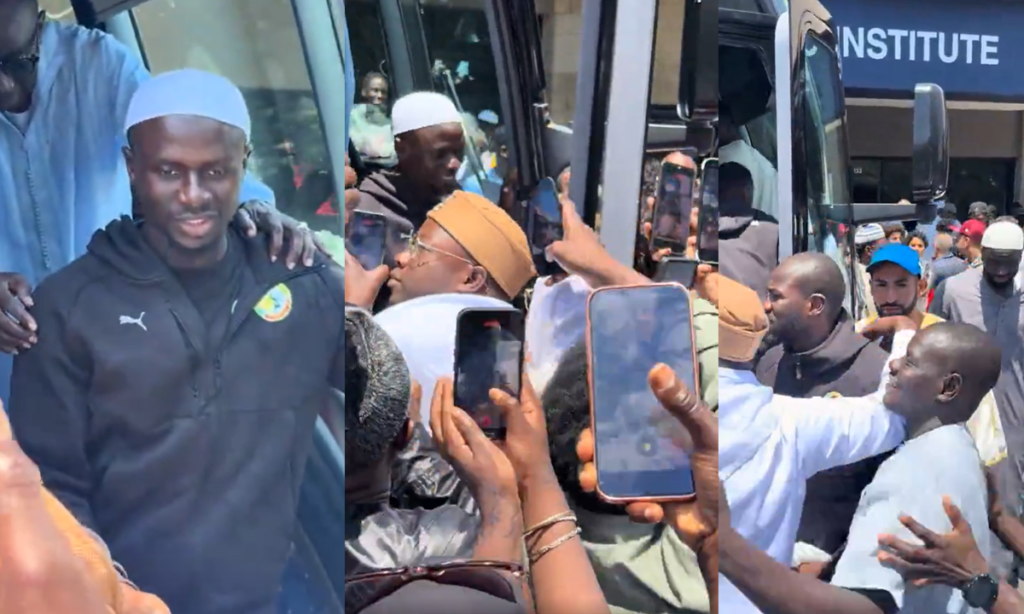
In a scene reflecting unparalleled hypocrisy, a large crowd of Senegalese fans welcomed the Senegal national team while they performed Friday prayers at an Islamic center in the United States.
Videos circulating show a massive gathering of fans and the Senegalese community surrounding the players with great enthusiasm, amid a near-complete absence of official security measures.
This scene, described by many as “astonishing,” raised questions about the safety of the players in such large gatherings, especially with prominent stars in the Senegalese team present.
Official Complaints from Morocco.. and Silence in America
This event stands in stark contrast to what the Senegalese Football Federation (FSF) raised during the final of the Africa Cup of Nations 2025 in Morocco. The Senegalese federation issued strong official statements and organized press conferences, complaining of “a blatant lack of adequate security measures” upon the arrival of the Senegalese delegation at the Rabat train station.
The federation claimed that the number of police officers was limited (about 5 only), exposing the players and coaching staff to the risk of mingling with the crowds, and they demanded immediate action from the African Football Confederation (CAF).
The complaints also included other issues such as accommodation, training, and ticket distribution.
Head coach Pape Boba Thiao stated: “What happened yesterday is unacceptable… A team like Senegal gets off the train and faces an undisciplined crowd, and the players are at risk.” The federation expressed concern over the “non-compliance with major competition standards.”
Double Standards or Differences in Context?
Now, months later, Moroccan followers and others are questioning: Where are the official statements and press conferences regarding the American scene? Why has the Senegalese federation remained completely silent in front of a larger crowd and clearer absence of security, while loudly raising its voice in Rabat?
It seems that some observers view this as “double standards,” where Americans (or “Papa America” as described by some commentators) are treated with silence and tolerance, while heavy blame is directed at the host Morocco. This contradiction raises a broader discussion about football as a diplomatic tool, and how sports grievances are affected by political and international relations. Senegal maintains strong ties with the United States, while relations with Morocco experienced temporary tension during the African tournament.