
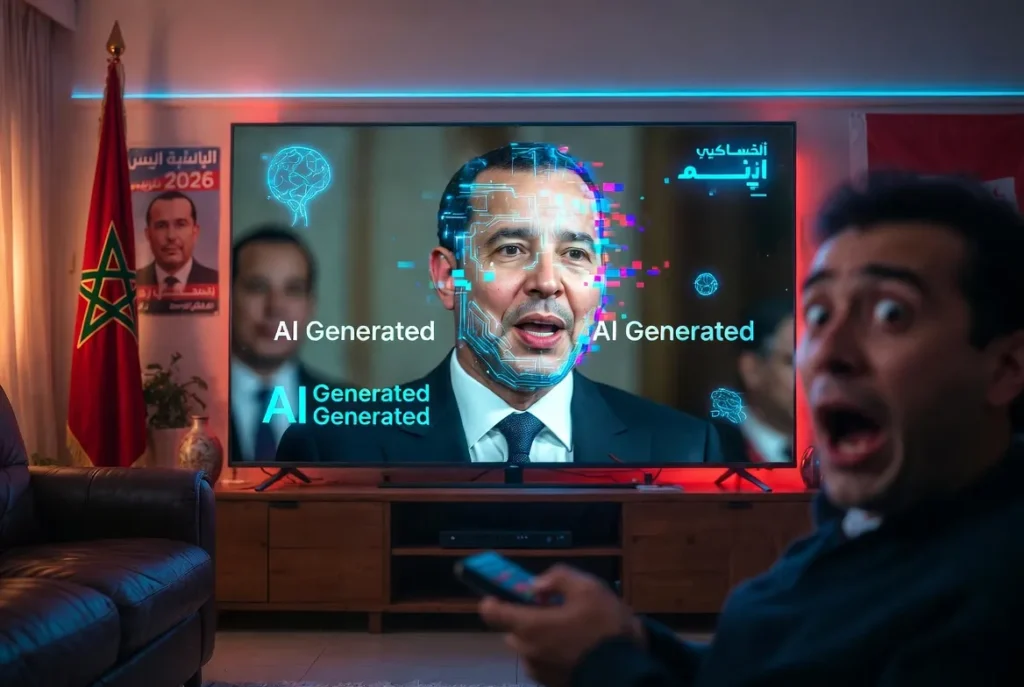

The High Council for Audiovisual Communication, the deliberative body of the High Authority for Audiovisual Communication in Morocco “HACA”, during its meeting on June 16, 2026, adopted a regulatory decision that organizes the coverage of the general legislative elections scheduled to take place on September 23, 2026.
This decision, which will be published in the Official Gazette, marks a qualitative leap in regulating audiovisual media during electoral periods, especially through a clear and explicit ban on the use of artificial intelligence in producing fake electoral content.
Accurately Organized Electoral Period
The decision sets an overall electoral period lasting 39 days, extending from August 15 to September 22, 2026, and is divided into two phases:
- Pre-election campaign phase: 26 days.
- Official election campaign phase: 13 days, from September 10 to September 22, 2026.
This precise temporal framework aims to ensure equal opportunities among political parties and candidates and to organize their access to radio and television channels in a fair and transparent manner. Ensuring pluralism, neutrality, and combating misinformation, the decision emphasizes fundamental principles of the integrity of the democratic process, including:
- Respect for the dignity and private life of candidates.
- Prohibition of any discourse that incites hatred, racism, or violence.
- Clear distinction between electoral content and entertainment, cultural, or artistic programs.
- Prohibition of veiled electoral communication.
- Obligation for journalists and program hosts who run for election or declare their support for a political party to cease appearing on screen or air.
- Complete transparency regarding conflicts of interest among experts and influencers.
It also obliges operators (channels and radios) to actively contribute to combating fake news, prohibiting them from publishing opinion polls from the fifteenth day prior to the start of the official campaign until the closing of polling stations.
Prominent Focus: Prohibition of Using Artificial Intelligence in Electoral Deception
The aspect related to artificial intelligence represents the most significant new development of this decision. Recognizing the increasing risks posed by the uncontrolled use of AI techniques in producing fake images, videos, and voices (Deepfakes), the text is clear and decisive:
“The High Council for Audiovisual Communication explicitly prohibits the broadcast of fake electoral content generated by artificial intelligence if it is likely to mislead the public or undermine the integrity and credibility of democratic discourse.”
The decision requires any AI-generated content for educational or explanatory purposes to be accompanied by a clear, permanent, and unmistakable identifying label that explicitly indicates the use of artificial intelligence technology.
This measure aims to protect public opinion from evolving digital deception, which has become a dangerous tool in elections worldwide.