

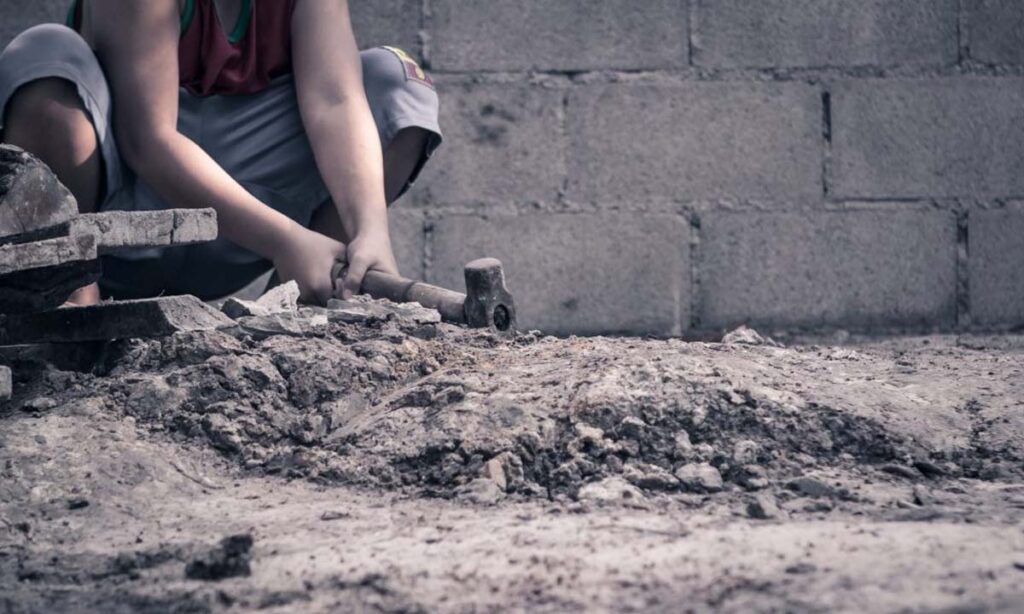

The High Commission for Planning revealed that approximately 103,000 children in Morocco, aged between 7 and 17 years, were engaged in economic activities in 2025. Meanwhile, the number of children working in hazardous conditions or jobs was about 59,000.
The Commission stated in a memorandum on the occasion of World Day Against Child Labor, which falls on June 12 each year, that working children represent 1.3 percent of the total population aged 7 to 17 years.
The Commission clarified that 58.4 percent of working children, close to 59,000, work in hazardous conditions. This represents 0.7 percent of the total number of Moroccan children belonging to this age group. This group is predominantly concentrated in rural areas, where approximately two-thirds of at-risk children reside, while males make up over 92 percent of them.
The seriousness of the situation becomes more evident when examining the nature of the activities they engage in, with the percentage of those working in hazardous conditions reaching 78.4 percent in the industrial sector, 76.3 percent in the services sector, and 71.3 percent in the construction and public works sector, compared to 43.6 percent in agriculture, forestry, and fishing.
The figures also reveal a close link between child labor and early school dropouts, with 88 percent of working children having left school. Meanwhile, the percentage of those combining education and work does not exceed 11 percent.
The rural areas remain the most affected by the phenomenon, where 76.2 percent of working children live. Their employment rate rises to 2.4 percent compared to 0.5 percent in urban areas. Most of the workers are concentrated in the agriculture, forestry, and fishing sector, which attracts about 69.1 percent of them in rural areas.
Data from the Commission indicates that the phenomenon affects approximately 73,000 Moroccan families, most of them in rural areas, and is clearly linked to social vulnerability and the educational level of the head of the household. The rates of child labor are higher within larger families and families headed by individuals without an educational background or with a limited level of education.