





Starting your morning with a cup (or two, or three) of coffee is a cherished routine for many. But should we feel guilty about it?
A recent scientific statement from the American Heart Association (AHA) sheds some light on this question.
The research team compiled the latest health data on caffeine from various studies that evaluated its impacts on factors like blood pressure, cholesterol levels, and the risk of metabolic and cardiovascular diseases.
According to the findings, moderate coffee consumption is generally safe for most individuals and may even offer health benefits.
However, it’s important to consider a few caveats. Like many things, moderation is crucial; adding cream, sugar, sweeteners, or flavored syrups can negate any positive effects from coffee.
The type of caffeine source is significant as well. Coffee and tea come with antioxidants and other compounds that contribute to their health benefits, while energy drinks can contain excessive caffeine along with sugar and other unhealthy ingredients.
“Caffeine in coffee is integral to the daily life of millions,” says Gregory Marcus, a cardiologist at the University of California, San Francisco, and Chair of the AHA writing group for this statement.
“Our review indicates that for most adults, consuming up to 400 milligrams of caffeine per day—equivalent to five cups of coffee—without added sugars or fillers, is safe and does not increase cardiovascular risk.”
The statement primarily examined caffeine’s relation to cardiovascular risk factors like blood pressure and diabetes, as well as various types of cardiovascular diseases such as arrhythmias, coronary artery disease, stroke, and heart failure.
The overall findings were complex but generally encouraging.
In individuals with hypertension, caffeine was observed to increase blood pressure. Yet, among those with normal blood pressure, drinking one to three cups daily increased the risk of developing hypertension, whereas consuming more than three cups seemed to lower the risk.
Once again, the source of caffeine is vital: one study linked energy drinks to elevated blood pressure, whereas coffee appeared to have a protective effect.
“These varying outcomes may stem from differences in caffeine concentration and the presence of other bioactive compounds like taurine in energy drinks and chlorogenic acid in coffee, which have opposing effects on blood pressure,” the researchers note.
Research reviewed consistently links regular coffee drinking to a reduced risk of type 2 diabetes. One study indicated a 27 percent lower risk for women consuming three or more cups daily compared to non-drinkers, while another found a 30 percent lower risk for those consuming five cups daily.
Caffeine (or coffee) also appeared to reduce the risk of coronary artery disease. A meta-analysis of 30 studies linked up to 3.5 cups of coffee daily to a roughly 10 percent lower risk of developing the disease.
Another study utilizing UK Biobank data found that up to five cups of coffee daily correlates with a lower risk of coronary artery disease compared to non-drinkers, with two to three cups being optimal. The effects may not just be attributed to caffeine but possibly to other compounds present in the coffee.
A similar trend has been observed in stroke risk: A meta-analysis showed that those consuming three to four cups daily may experience a 21 percent reduction in stroke risk.
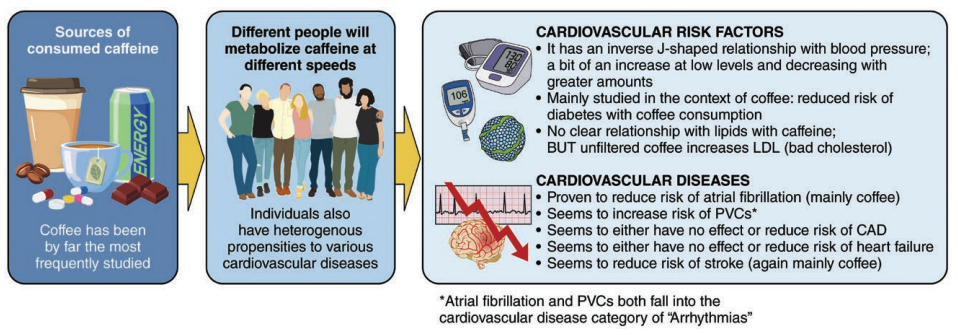
Overall, the new AHA statement concludes that there is an increasing body of evidence showing caffeine is safe when consumed moderately, with coffee potentially offering health benefits.
“The consensus from large cohort studies and small randomized controlled trials supports the notion that moderate caffeine or coffee consumption (up to 400 mg per day, around 3-5 cups) is safe for most adults and is linked to a decreased risk of cardiovascular diseases including coronary heart disease, stroke, heart failure, atrial fibrillation, hypertension, and type 2 diabetes,” the report concludes.
The researchers noted that further studies are needed to separate caffeine from other compounds, explore additional sources beyond coffee, and investigate how effects may vary for individuals with hypertension and other conditions.
This statement was published in the journal Circulation.